
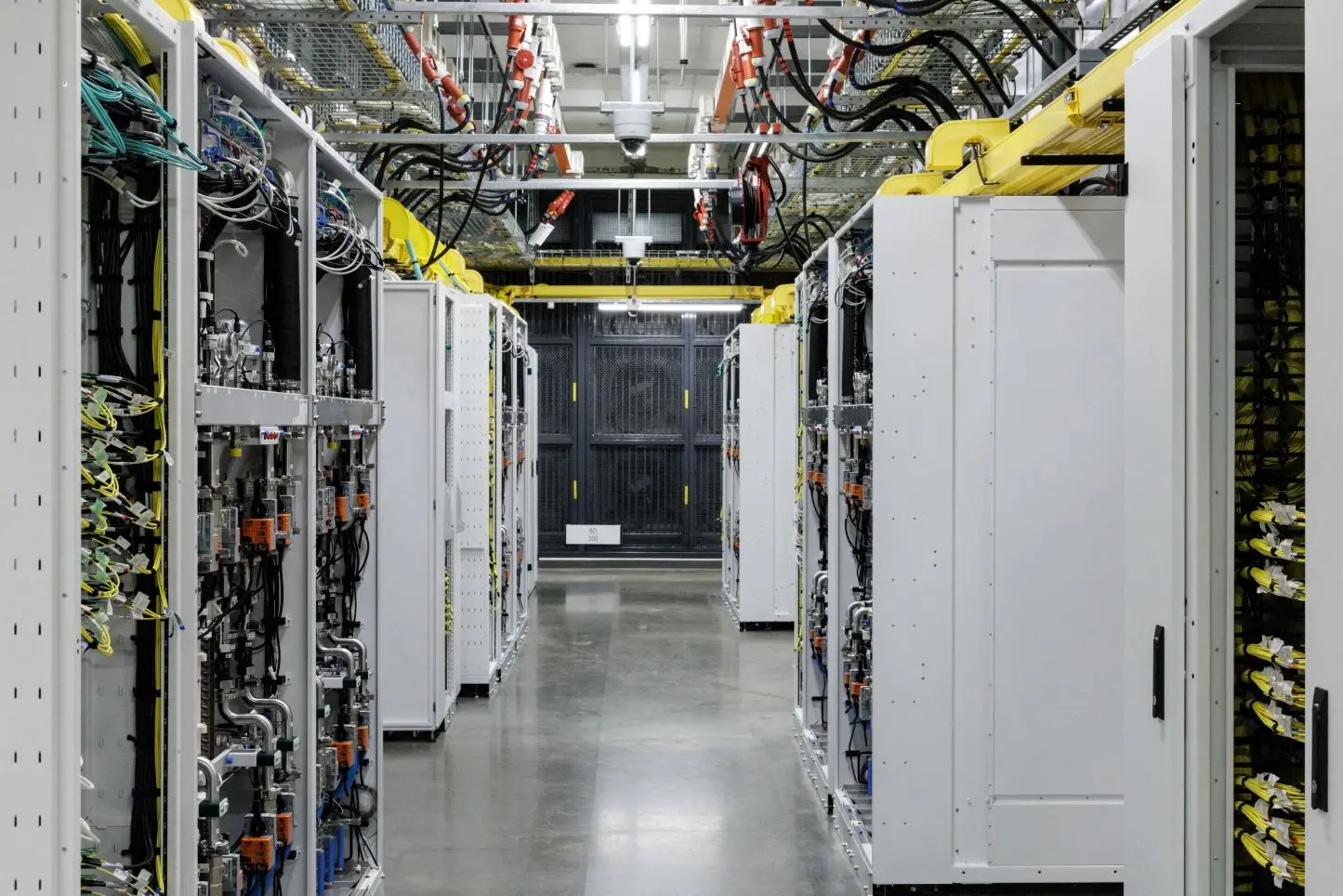
For years, the so-called cloud—the vast network of databases that stores files, applications, software and computing capacity accessible to individuals and businesses through an internet connection—has often been portrayed as something intangible, suspended in a digital realm without geography, almost like a literal “cloud”. In reality, every email, online search or artificial intelligence model ultimately depends on highly tangible physical infrastructure: data centers.
The geographical location of data centers is not merely a technical matter. It is also a matter of power. Those who control the physical computing infrastructure deployed across the globe increasingly shape the digital economy—cloud computing, artificial intelligence, online services and digital platforms. For this reason, many governments are beginning to treat data centers as strategic infrastructure, on par with ports, energy grids or telecommunications networks. Data sovereignty—the ability to store and manage information within national borders—has become a priority for many countries.
Data centers are typically large facilities filled with servers that process and store data, consuming vast amounts of electricity and requiring increasingly sophisticated cooling systems. As artificial intelligence expands rapidly, their deployment is accelerating and their geography is extending into places that would have seemed unlikely just a few years ago: Arctic regions, deserts, ocean floors and even outer space.
The race for data centers has become one of the less visible fronts in global technological competition. Governments and major tech companies are investing billions to secure computing capacity, strengthen data sovereignty and gain an advantage in training AI models. The expansion of data centers reflects a deeper transformation: in the global economy, computing power has become a critical resource, comparable to energy or raw materials. Yet these infrastructures require space, stable power supplies and efficient cooling systems to operate. The search for these conditions is reshaping the global map of data centers.
Northern and Arctic regions: cold as infrastructure
One of the most evident strategies is to locate data centers in colder regions. The reason is straightforward: cooling servers can account for up to 40% of a facility’s energy consumption. Harnessing naturally low temperatures reduces both costs and environmental impact.
Nordic countries have become strategic hubs for Europe’s digital infrastructure. In Finland, in the city of Hamina, Google has converted a former paper mill into one of its largest European data centers, cooled with seawater from the Gulf of Finland. In Sweden, Meta operates one of its main hubs for global Facebook and Instagram services in Luleå, just a few kilometres from the Arctic Circle, taking advantage of the cold climate and local hydropower.
Iceland has also positioned itself as a potential global digital hub. Companies such as Verne Global have developed large server farms powered by geothermal and hydroelectric energy, benefiting from stable temperatures and an almost entirely renewable energy system. This “geography of cold” also has a geopolitical dimension. Locating data centers in politically stable territories with reliable energy infrastructure has become a key element of digital security, particularly for governments and public institutions.
Underground and arid regions: where space is abundant
Another trend involves the use of extreme or unconventional spaces. Some data centers are built underground, inside former military bunkers or decommissioned mines. In Stockholm, the Pionen data center—operated by the Swedish provider Bahnhof—is housed in a former nuclear bunker carved into rock, converted into a highly secure and resilient facility. At the same time, investment is growing in the arid regions of the Gulf. Countries such as the United Arab Emirates and Saudi Arabia are building large-scale digital infrastructure to support economic diversification and the development of artificial intelligence. In Dubai, Microsoft launched its first Middle East cloud region in 2019, while Amazon Web Services has developed data centers in Bahrain to serve the regional market.
In these environments, the abundance of space and relatively low-cost energy offsets the challenges associated with cooling. These emerging digital clusters often become regional hubs for data traffic, connected through submarine cables and high-capacity networks.
Beneath the sea: a new experimental frontier
Among the most radical solutions are underwater data centers. The concept is to use the naturally low temperature of seawater to cool servers while positioning infrastructure close to major internet cable routes. One of the best-known experiments was Microsoft’s Project Natick, which in 2018 deployed a subsea module off the Orkney Islands in Scotland. The data center, sealed inside a steel cylinder on the seabed, operated for more than two years and demonstrated high energy efficiency. China is also developing similar initiatives: in 2023, an underwater data center was launched off the coast of Hainan Island, operated by Highlander and connected to the national network to support artificial intelligence and cloud computing applications. If these solutions prove scalable, they could reshape the geography of digital infrastructure by shifting part of the world’s computing capacity closer to the oceanic backbones of the global internet.
Towards orbit: data centers in space
The most futuristic prospect involves space-based data centers. Several companies are exploring the possibility of placing computing infrastructure in Earth’s orbit, powered by solar energy and connected to the global network via satellites.
Among the initiatives under study are projects by the US startup Axiom Space and the computing company Redwire, both working on data-processing systems designed for future space infrastructure. The European aerospace company Thales Alenia Space is also exploring “space cloud” concepts to support the next generation of orbital stations and satellites. The rationale behind these ideas is twofold: reducing the energy footprint of terrestrial data centers and bringing computing capacity closer to future space infrastructure, from Earth-observation satellites to communications systems. In theory, the absence of an atmosphere and the abundance of solar energy could make such facilities highly efficient. For now, these projects remain experimental, but they point to a clear direction: digital infrastructure is becoming increasingly distributed and multi-layered, extending beyond the boundaries of the planet.
From the ice of the North to the depths of the ocean and up to orbital space, the infrastructure underpinning the digital world is becoming more extensive, energy-intensive and strategically important. As artificial intelligence continues to accelerate, the demand for computing capacity will only grow. And with it, the geography of digital infrastructure will continue to evolve—an increasingly widespread network stretching across extreme climates, oceans and even space to sustain the emerging data-driven economy.